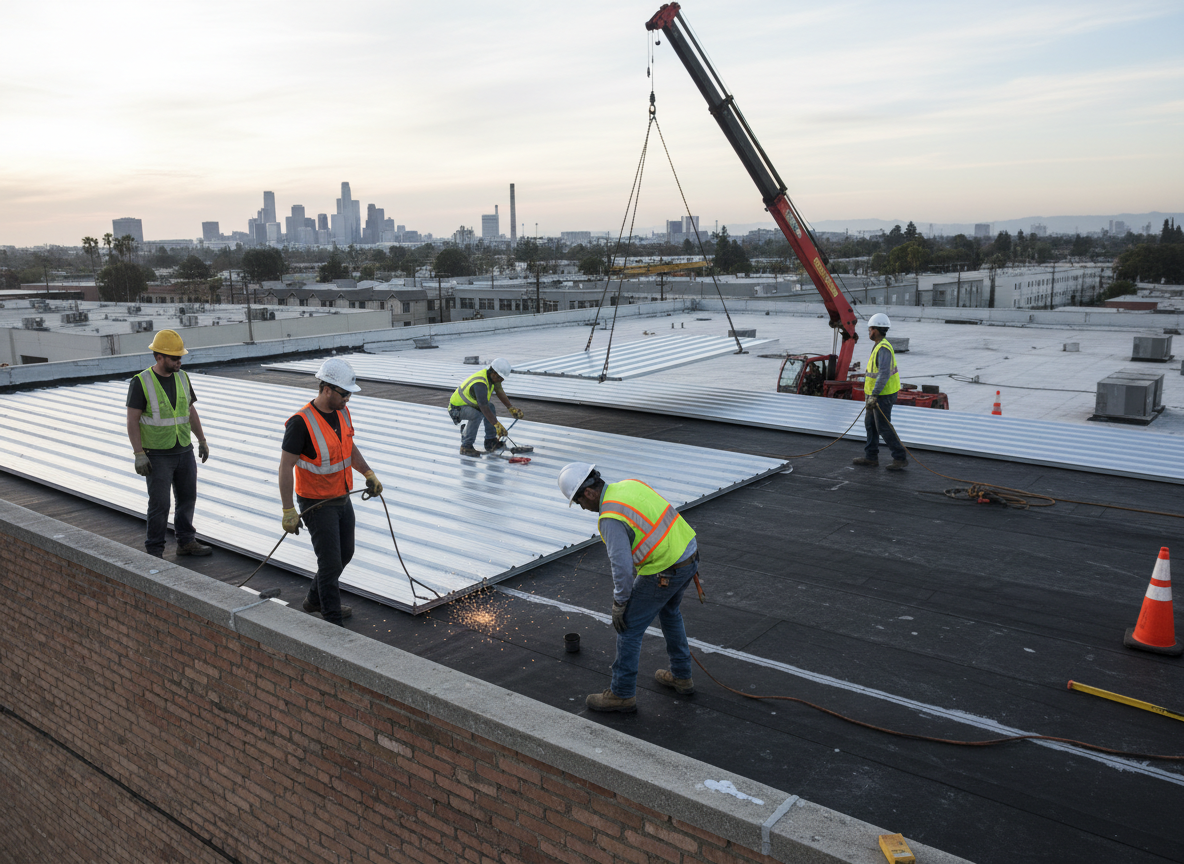
Industrial roofs in Lynwood often involve large flat or low-slope surfaces on warehouses and manufacturing sites along the Hwy 99 corridor. These installations require membranes such as TPO or EPDM that handle constant foot traffic from HVAC techs and resist standing water during prolonged wet periods. Crews must coordinate around active operations so production downtime stays minimal while seams and flashings receive extra attention at penetrations.
Older industrial stock in Snohomish County frequently shows deck deterioration from previous poor drainage or deferred maintenance. When replacing sections, crews check for hidden rust on metal decks and upgrade insulation to current energy standards without triggering full re-permitting unless structural changes occur. Edge details at parapets and scuppers need reinforcement because wind-driven rain funnels along the building lines common in this terrain.
Code compliance in the Lynwood area demands proper attachment patterns for uplift resistance and correct slope for secondary drains. Skipping these steps leads to insurance issues when leaks appear under equipment pads. Experienced crews document every layer removed so owners see exactly where previous contractors cut corners on ballast or fastener spacing.
Technician insight
In Lynwood, the thing that catches most people out with industrial roofing contractors is underestimating how quickly water ponds behind HVAC curbs on older metal decks near the highway; the flat terrain and frequent light rain let small drainage issues turn into widespread deck rust before owners notice.
Warehouse Roof Leak Near Equipment Pad
Water was entering an active distribution building off 198th Street. Inspection revealed failed flashing around a rooftop unit and deteriorated insulation below. The crew replaced the affected section with new TPO, added tapered crickets for drainage, and tied the membrane into the existing system without shutting down operations. The building stayed dry through the next wet season.
How it works
- 1
Site Assessment
Walk the roof with the owner to map leaks, ponding areas, and equipment locations while noting access points from the Hwy 99 address.
- 2
Material Selection
Match membrane type and insulation R-value to the building's use and exposure on the Lynwood plateau.
- 3
Staging and Safety
Set up containment and fall protection so daily operations continue uninterrupted below the work zone.
- 4
Installation and Detail Work
Install new membrane, flash all penetrations, and test seams before final cleanup.
- 5
Final Walk and Documentation
Review completed sections with the owner and provide maintenance guidance specific to industrial traffic patterns.
Pricing
Costs depend on roof size, existing deck condition, and chosen membrane system; quotes provided after on-site inspection.