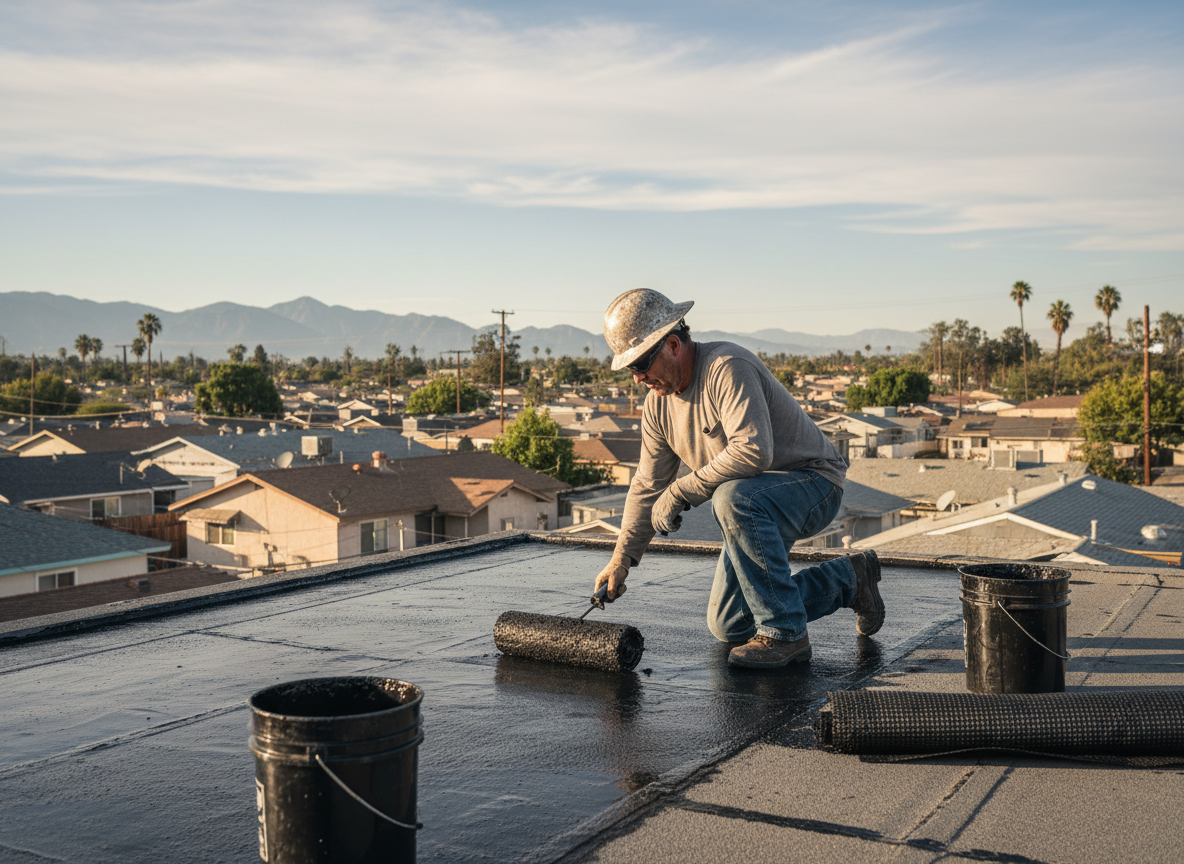
Lynwood homes built from the 1970s through 1990s often feature asphalt shingle roofs with aging underlayment that fails during the prolonged wet season from October through March. Liquid-applied waterproofing membranes, such as acrylic or polyurethane coatings, bond directly to existing surfaces and seal around penetrations like vents, skylights, and chimneys where leaks commonly start. Proper surface preparation is critical because moss and algae growth on north-facing slopes traps moisture and prevents adhesion.
Snohomish County building codes require that any waterproofing work on low-slope sections maintains positive drainage to avoid ponding, a frequent issue on flatter lots near Highway 99. Edge cases include homes with attached garages where roof-to-wall transitions meet siding; these joints need reinforced fabric tape and multiple coating layers to handle wind-driven rain. Homeowners sometimes attempt DIY sprays that crack within two seasons because they skip the primer step required for the region's temperature swings.
Terrain in neighborhoods like Alderwood Manor and Lake Stickney creates runoff patterns that push water against foundation walls when roof edges lack proper drip edges or gutters. Waterproofing crews must inspect and correct these transitions during application to prevent interior moisture damage that shows up months later in attics or ceilings.
Technician insight
In Lynwood, the thing that catches most people out with roof waterproofing is older homes along 44th Avenue where the original felt underlayment has deteriorated but the shingles still look okay from the street. Heavy winter rain finds those hidden weak spots fast, especially on the low-slope sections near the garage that never dry out.
Alderwood Manor Leak After Heavy Rain
Water stains appeared in the ceiling of a 1982 split-level near 36th Avenue. Inspection showed failed flashing at the skylight and moss buildup blocking drainage on the north slope. We cleaned the surface, reinforced the transition, and applied a full acrylic membrane system. No further leaks occurred through the next two winters.
How it works
- 1
Site Assessment
Walk the roof and attic to identify existing leaks, ponding areas, and failed flashing on Lynwood homes.
- 2
Surface Preparation
Remove debris, treat moss, and repair minor damage so the waterproofing membrane adheres properly.
- 3
Membrane Application
Apply primer followed by liquid coating in multiple passes, paying special attention to seams and penetrations.
- 4
Final Inspection and Drainage Check
Verify coating thickness and confirm gutters and downspouts direct water away from the structure.
Pricing
Cost depends on roof size, pitch, and existing condition; request an on-site assessment for a written quote.