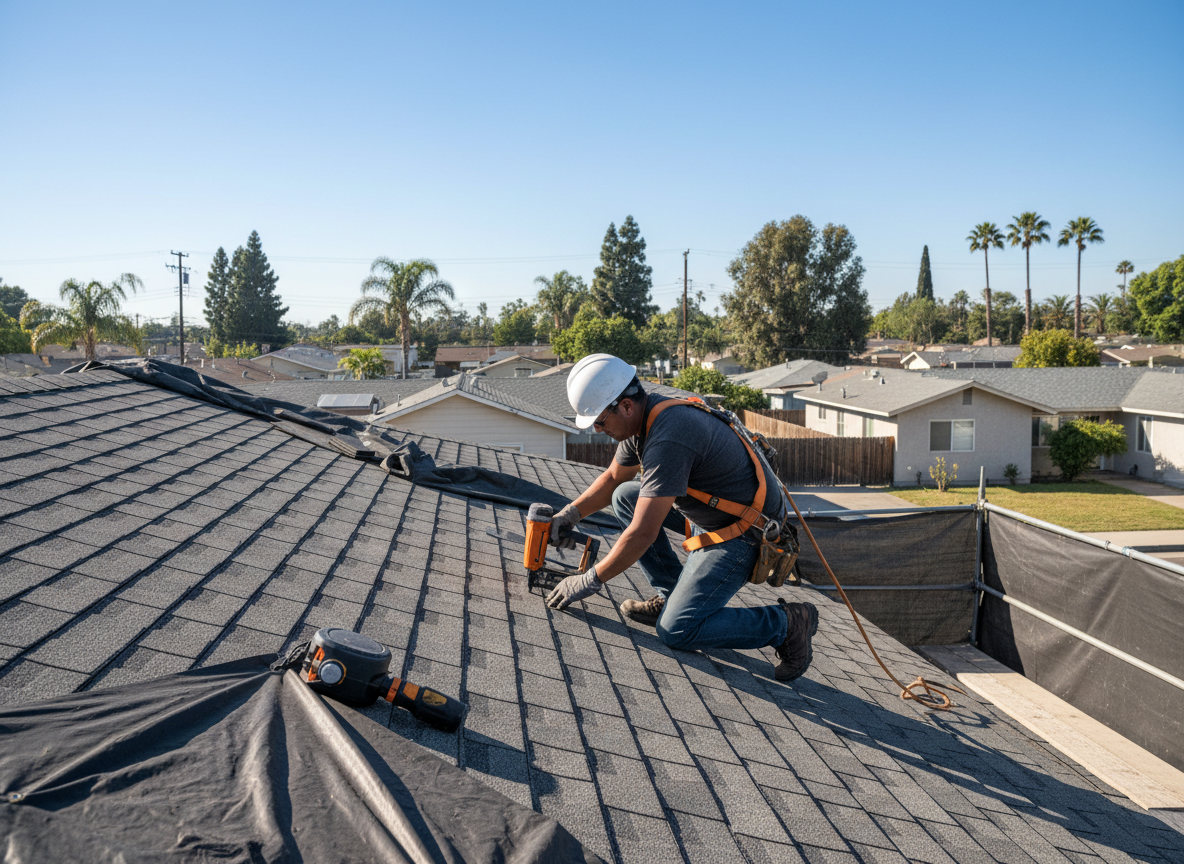
Lynnwood sits in Snohomish County where roofs take steady rain from October through April plus occasional wind gusts off the Sound. Many neighborhoods such as Alderwood and the areas along 44th Avenue hold homes built between 1965 and 1985 with three-tab asphalt shingles that now show granule loss and moss along the north slopes. A roofing specialist here learns to pull back the bottom course to check for rotted felt and plywood rather than just replacing surface shingles.
Wind-driven rain often forces water under ridge vents and around plumbing boots on these older roofs. We carry extra step flashing and high-temperature underlayment on every truck because the freeze-thaw cycles in winter can open small gaps that standard felt will not stop. Homeowners in the 98036 zip commonly discover leaks only after water reaches the ceiling joists above the garage or kitchen.
Local building practices require 6-inch overlap on underlayment and ice-and-water shield along the eaves for any roof work that touches the existing deck. Skipping that step leads to callbacks once the next heavy rain hits. We also watch for the low-slope additions common on 1970s ramblers where water pools against the main roof wall.
Technician insight
In Lynwood the thing that catches most people out with roofing specialist work is the hidden rot behind the fascia on 1970s split-levels along 196th Street. Constant drip from clogged gutters soaks the edge of the deck for years before any interior stain shows up, so we always pull the gutter and check the ledger before quoting a simple shingle patch.
Alderwood split-level leak
Homeowner noticed a ceiling stain after a November rain. We found the original felt torn under the ridge vent where wind had driven water for years. We removed two courses of shingles, installed new ice-and-water shield and step flashing, then matched the existing shingles. No further leaks reported after the next storm.
How it works
- 1
On-site assessment
We walk the entire roof, check attic ventilation, and note any soft spots or previous patch work.
- 2
Moisture mapping
Infrared scan and probe testing locate hidden water behind fascia or under ridge lines before any material is ordered.
- 3
Targeted repair or section replacement
We match existing shingle profile and color while installing new underlayment and flashing at penetrations.
- 4
Final water test and cleanup
Hose test on repaired sections followed by magnet sweep and gutter clearing before we leave the site.
Pricing
Upfront written quote after the roof assessment; price depends on access, number of layers, and extent of deck repair needed.